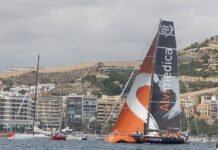
The six IMOCA crews competing in The Ocean Race Atlantic 2026 are facing one of the most demanding stages of the transatlantic crossing. With more than 2,000 nautical miles remaining to the finish, Team Francesca Clapcich powered by 11th Hour Racing has taken the lead, while Team Malizia is working to recover after repairing a damaged port foil.
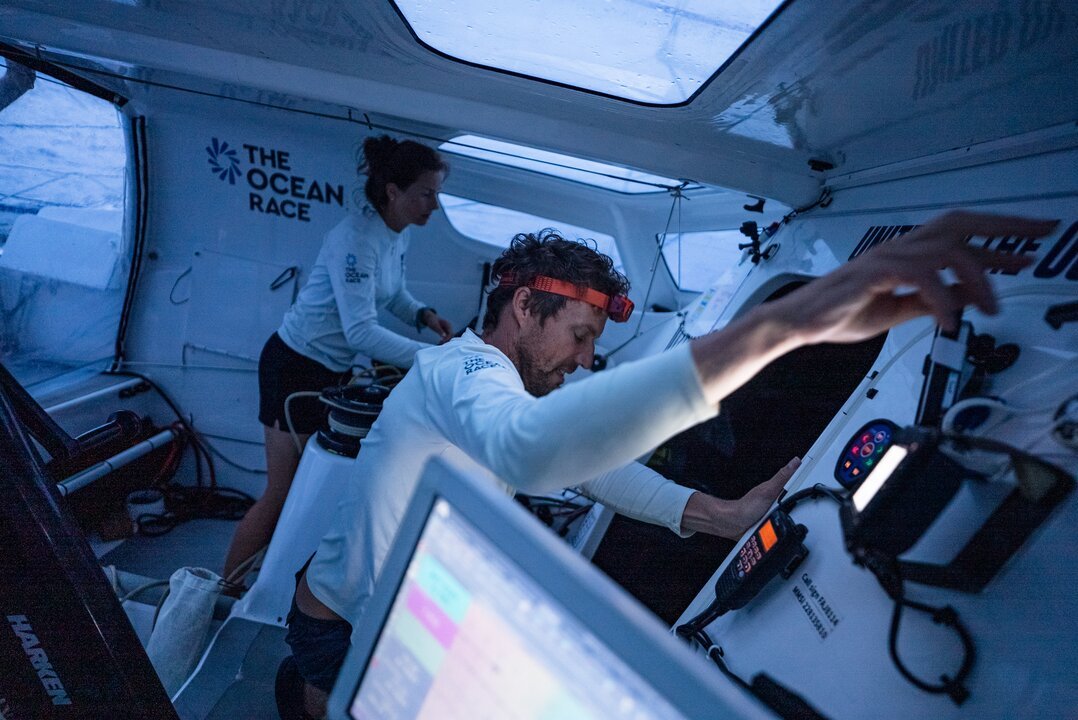
Strong winds are driving the boats at high speed, but the combination of wind direction and sea state is making the Atlantic crossing extremely uncomfortable. Continuous slamming, intense noise and violent movement are limiting sleep and placing both sailors and equipment under considerable pressure.
Team Malizia, which had led much of the race, struck an object at high speed with its port foil. The crew reduced speed to assess the damage and carry out repairs. Although the boat has returned to a strong pace, its foil use remains limited. The incident cost the team the lead and dropped it to fourth place, behind Team Francesca Clapcich powered by 11th Hour Racing, United by the Ocean and DMG MORI Sailing Team.
Across the fleet, the demanding conditions are testing the physical and mental limits of the sailors. Constant slamming makes sleep difficult, while strong winds and high boat speeds require maximum concentration. Some crews have even been wearing helmets for protection.
Sam Davies reported true wind angles of around 90 degrees, winds reaching 30 knots and average boat speeds close to 27 knots. The conditions are expected to continue challenging the fleet as the boats approach the final stages of the crossing.
Despite the difficult conditions, the racing remains highly competitive. In Saturday’s Super Sprint, Kojiro Shiraishi aboard DMG MORI Global One claimed his first victory, drawing level with Team Malizia at the top of the Super Sprint standings.
With the Atlantic still demanding maximum concentration from both sailors and boats, the battle for the finish remains wide open.